What Listing Photos and Spec Tables Really Tell You About a Vape Supplier Singapore
A product photo is not a product; it is evidence, and like all evidence it can be strong, weak, or staged. When you are comparing listings from a vape supplier singapore, the images and the specification table are the two main sources of proof you have before checkout. Learning to read them separately, and then noticing what neither one covers, is the fastest way to tell a careful seller from a careless one.
This is a buyer’s guide to visual literacy. It uses Lana items as worked examples, because some listings show exactly how to present a product and others show exactly how not to.
What the Photographs Actually Reveal
A good product image answers four questions at once: what the item is, how big it is, what condition it arrives in, and whether the seller has actually handled it. A photo that answers only the first question is decoration, not evidence.
Scale cues separate real listings from stock images
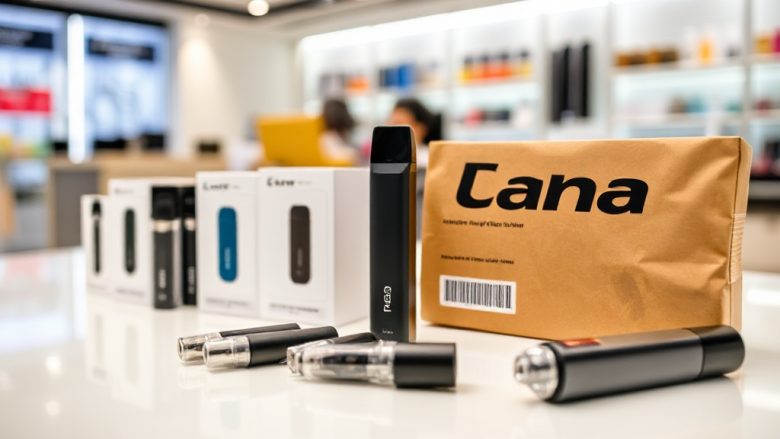
Look for a hand, a ruler, or a familiar object beside the device. A pod cartridge photographed alone on white tells you nothing about whether it will sit flush in your battery. A listing for a Sg vape disposable that shows the device next to its retail box gives you two pieces of information: the physical footprint and the packaging format. Stock renders rarely include either.
Scale is the first thing a serious listing establishes. If the seller cannot show size, they probably have not opened the box.
Packaging shots show authenticity signals
Authentic products arrive in packaging with batch codes, tamper seals, and consistent print quality. A photo of the sealed box, even without readable text, lets you compare the shape and finish against what you expect. Listings that show only the bare device, with no box at all, remove your ability to check the seal on arrival.
Watch for consistency across a seller’s catalogue. If every product photo has the same lighting, background, and angle, the seller is photographing their own stock. If every photo looks like it came from a different manufacturer’s press kit, you are looking at a reseller who may never see the item.
Hardware close-ups reveal build quality
A close-up of the pod connection, the mouthpiece seam, or the charging port tells you more about manufacturing standards than any marketing sentence. Gaps, flashing, or uneven finishes in a close-up are honest signals. Listings that avoid close-ups are often avoiding scrutiny.
For pod systems, the joint between pod and battery is the most informative area. A clean, tight tolerance suggests a device designed to be used repeatedly. A loose or visibly uneven fit suggests a disposable-grade build.
What the Specification Table Can and Cannot Prove
The specification table is where a listing becomes checkable. It converts claims into numbers, and numbers can be compared across sellers. But a table is only as useful as the fields it includes.
Fields that should always be present
At minimum, a serious listing states capacity, resistance or coil type, battery rating, dimensions, and the number of units per pack. For a Singapore vape delivery purchase, where you cannot inspect the item before it arrives, these fields are your only pre-purchase check.
- Capacity in millilitres, not vague terms like “large”
- Coil resistance or pod type, so you know compatibility
- Battery capacity or expected usage, stated as a number
- Pack quantity and whether the price is per unit or per box
A table without numbers is marketing copy in rows.
How to compare two listings fairly
Put two sellers side by side and check whether they are describing the same thing. One may price per pod, another per pack of three. One may quote a puff count measured under lab conditions, another a real-world estimate. The comparison below shows the kind of gap that matters.
| Field | Strong listing | Thin listing |
|---|---|---|
| Capacity | Stated in ml per pod | “Long-lasting” |
| Compatibility | Named device family | “Universal” |
| Pack size | Units per box stated | Price only |
| Authenticity | Batch or seal reference | None |
The thin column is not necessarily a scam. It is simply a listing that has not done the work of letting you verify anything.
Spec tables and delivery promises
Specifications describe the product; they say nothing about fulfilment. That is why a seller advertising SG Vape same day delivery should state cut-off times and coverage areas somewhere on the page. A specification table that includes a delivery field is a sign the seller understands that the product and the service are sold together.
The Gaps Neither Photos Nor Specs Cover
Between the image and the table there is a blind spot, and most buyer disappointment lives there.
Freshness and storage
No photo shows how long a device has sat in a warehouse, and few tables mention storage conditions. Heat and time affect batteries and e-liquid. A seller who mentions rotation or storage is telling you something the images cannot.
After-sales behaviour
What happens if the device arrives faulty? A listing can show a perfect product and still belong to a seller with no replacement policy. Look for a stated process, not just a contact form. This is where a sg vape delivery service distinguishes itself from a marketplace stall.
Payment and handover
Cash on delivery changes the risk profile of a purchase, because you can inspect the parcel before paying. A seller offering COD is effectively putting their packaging and product quality on the line at the door. If a listing mentions lana vape delivery with COD, that is a stronger signal than any product render.
Terms of handover are evidence too. They tell you how confident the seller is in what they are shipping.
Brand consistency across a catalogue
A seller who stocks one brand deeply usually knows that brand’s range better than a seller who lists everything. A catalogue built around sg vape lana products, with consistent naming and matching photos, is easier to audit than a mixed list of near-identical devices.
Reading a Listing the Way an Auditor Would
Put the two evidence streams together in a fixed order, and the assessment takes about two minutes.
- Check the photo for scale and packaging. If neither is present, note it.
- Read the table for numbers, not adjectives. Missing fields are a cost you will pay later.
- Confirm pack size and price basis so you are comparing like with like.
- Look for delivery, payment, and replacement terms in the same listing.
- Compare the seller’s catalogue for consistency of style and stock.
Most weak listings fail at step two and never recover. Most strong listings pass all five without needing a single persuasive sentence.
Frequently Asked Questions
Can a product photo prove a device is authentic?
No. A photo can show packaging shape, seals, and print quality, which are useful signals, but only the physical item and its batch code can confirm authenticity. Treat photos as a filter, not a guarantee.
Why do some listings omit battery and capacity figures?
Usually because the seller is working from a supplier sheet rather than their own stock, or because the figures would make the product look ordinary next to a competitor. Either way, missing numbers are a reason to ask before buying.
Does same-day delivery affect how I should read a listing?
Yes. A delivery promise is a service claim, and it should come with a cut-off time and coverage area. A listing that pairs clear specifications with clear fulfilment terms is generally run by a seller who expects repeat customers.
What is the single most useful thing to check first?
The specification table. It is the only part of a listing that can be compared line by line across sellers, and it exposes thin listings faster than any photograph.
Comments
Pingback: 채팅과 전화와 폼: 홈타이 예약 창구별 사용감 비교 – Edel Shore